




Best Coffee Bean Grinder: 10 Top Picks Tested and Compared
This post contains affiliate links. If you purchase through these links, I may earn a small commission at no extra cost to you. This helps support the site and allows me to keep reviewing coffee gear.
Pre-ground coffee starts losing its flavor within minutes of grinding. That is not marketing hype. It is basic chemistry. The volatile compounds that give coffee its aroma and complexity evaporate quickly once the bean is broken open. If you care about how your coffee tastes, grinding fresh beans right before brewing is the most impactful change you can make.
I put together this list after testing grinders ranging from $25 blade models to $132 manual precision tools. Whether you are looking for your first coffee bean grinder or upgrading from one that has seen better days, this guide covers the full spectrum. I included electric and manual options, burr and blade designs, and everything from ultra-budget to mid-range price points.
My evaluation process focused on grind consistency (the most important factor for flavor), noise level, build quality, and how much of a hassle each grinder is to maintain. I also paid close attention to how well each grinder handles the medium grind range, since most people are brewing drip or pour-over at home.
Quick Picks
| Grinder | Best For | Price |
|---|---|---|
| MAVO Phantox Pro | Best grind quality overall | $132.99 |
| Rounexes Conical Burr | Best electric burr grinder | $99.99 |
| TIMEMORE C3S Pro | Best manual grinder | $95.00 |
| Aromaster 25-Setting | Best value for espresso fans | $69.99 |
| BLACK+DECKER One Touch | Best budget pick | $25.99 |
Individual Product Reviews
MAVO Phantox Pro Manual Coffee Grinder
The finest grind quality on this list, for those willing to put in the elbow grease.
The MAVO Phantox Pro is a manual grinder that outperforms most electric models in pure grind consistency. The secret is its 45mm self-developed Star-Tooth grinding core with 160 spikes that puncture beans rather than crushing them. This design dramatically reduces fine powder, which is the enemy of clean-tasting coffee. The result is a cup with more clarity and sweetness than what cheaper grinders produce.
The 120-click adjustment system is precise to 0.0167mm per click. You adjust directly on the outer body without opening the powder compartment, which makes switching between brew methods quick. Three bearings stabilize the central shaft with 3-micron precision, ensuring the burrs stay aligned grind after grind. At $132.99, it is not cheap for a manual grinder. But if grind quality is your top priority, the MAVO delivers results that rival grinders costing twice as much. If you are interested in other espresso bean grinder options, I have a separate guide for that.
Pros: - 45mm burr produces exceptionally low fines - 120-click precision adjustment on the outer body - Triple bearing system for consistent alignment - Handles espresso through French press equally well
Cons: - Manual grinding requires physical effort, about 30-40 seconds per dose - 30g capacity limits batch size - Premium price for a hand grinder at $132.99
Rounexes Conical Burr Coffee Grinder (Silver)
The best electric burr grinder for people who want set-it-and-forget-it convenience.
The Rounexes offers 30 grind settings with stainless steel conical burrs, and the standout feature is that everything comes apart for dishwasher cleaning. The burr assembly, grounds container, and hopper are all removable and dishwasher safe on the top rack. That alone puts it ahead of many competitors in the daily-use convenience department.
The 10.58oz bean hopper is large enough for 14 cups in one batch. Anti-static technology reduces mess, though some grounds still cling to the chute. For drip coffee and French press, the grind consistency is solid. Espresso settings are acceptable but not exceptional. At $99.99, it occupies a sensible middle ground between budget blade grinders and premium machines. The 27 reviews give me slight pause on long-term reliability, but what I have seen so far is promising.
Pros: - Dishwasher-safe removable components - Large 10.58oz hopper for big batches - 30 grind settings cover most brew methods - Anti-static design reduces ground scatter
Cons: - Espresso-fine settings could be more consistent - Limited review history (27 reviews) - Plastic body feels less premium than metal alternatives
TIMEMORE Chestnut C3S Pro Manual Grinder
A travel-ready manual grinder backed by thousands of satisfied users.
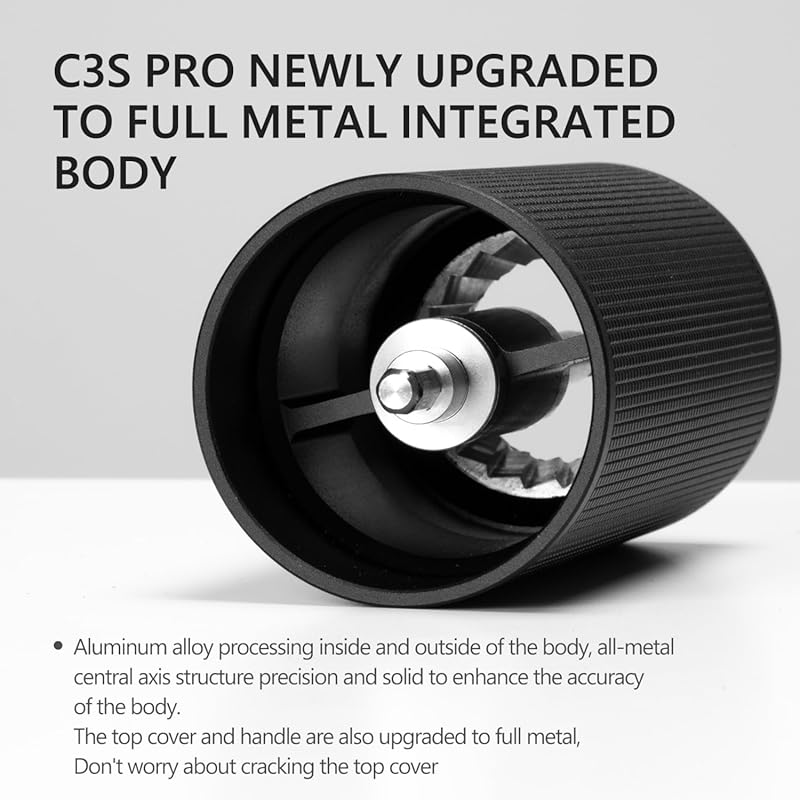
TIMEMORE has earned its reputation in the manual grinder world, and the C3S Pro with over 2,100 reviews proves it. The all-metal aluminum alloy body is a significant upgrade from older plastic models. The S2C660 patent conical burr, machined at 55-58 HRC hardness using 5-axis CNC, produces uniform particles with minimal fines.
The foldable crank handle is what makes this grinder travel-friendly. It tucks flat against the body for packing. The built-in bearing creates a flywheel effect where the handle keeps spinning even after you release it, which makes grinding less tiring. At $95.00, it sits between entry-level and premium manual grinders. The 52mm body is easy to grip even with smaller hands. My one complaint is the 36-level adjustment, which is adequate but less granular than the MAVO's 120 clicks.
Pros: - All-metal aluminum body for durability - Foldable handle for portability - S2C patent burr produces consistent grinds - Over 2,100 reviews confirming reliability
Cons: - 36 adjustment levels is less precise than some competitors - Manual grinding takes time and effort - Premium price among travel grinders
TIMEMORE Chestnut C2S Manual Grinder
The budget-friendly entry point to TIMEMORE quality.
The C2S is the more affordable sibling of the C3S Pro, coming in at $75.00. TIMEMORE upgraded it to a full metal unibody, solving the durability issue where the C2's top cover was prone to cracking. The 38mm coffee bean burr grinder core with dual bearing positioning delivers consistent particles across its 36 adjustment levels.
The 25g capacity and 430g weight make it practical for home use and portable enough for travel. TIMEMORE includes a cloth bag for carrying. The labor-saving bearing design means the handle has momentum, reducing fatigue during grinding. Where the C2S falls behind the C3S Pro is in the burr. The 38mm core is smaller, which means slightly longer grind times and marginally less consistency at espresso-fine settings. For pour-over and French press at home, though, the difference is minimal.
Pros: - Full metal unibody fixes old durability issues - 430g weight is travel-friendly - Dual bearing for smooth, effortless grinding - $20 less than the C3S Pro
Cons: - 38mm burr is smaller and slower than C3S Pro's - Internal adjustment requires more effort to change settings - 25g capacity may not be enough for larger brewing batches
Aromaster 25-Setting Conical Burr Grinder
A surprisingly capable electric burr grinder with a portafilter holder at a wallet-friendly price.
The Aromaster at $69.99 delivers features you would expect from grinders costing $100 or more. The 25 grind settings and 2-12 cup timer cover the range most home brewers need. The 51-53mm portafilter holder lets you grind directly into your espresso basket, saving a step in your workflow. If your portafilter uses a different size, the 5.6oz grinding chamber works as a backup.
The upgraded DC motor is quiet and efficient. The removable upper burr, hopper, and chamber make cleaning manageable. I like that a cleaning brush is included, even though it is tucked behind the bean bin lid where you might not think to look. The grind quality is good for drip, pour-over, and French press. Espresso results are acceptable but not competition-grade.
Pros: - Built-in 51-53mm portafilter holder - Quiet DC motor operation - 25 settings with cup timer for easy dosing - Strong value at $69.99
Cons: - Portafilter holder only fits 3-ear 51-53mm models - Espresso grind consistency is decent but not exceptional - Cleaning brush is hidden behind the bean bin lid
Garsal Home Electric Burr Grinder
A compact, rechargeable grinder with USB-C charging and 40 settings.
The Garsal Home at $49.90 is interesting because of its USB-C rechargeable battery. You can grind without being tethered to an outlet. With 40 grind settings and stainless steel conical blades, it covers a wider range than many electric grinders in this price bracket. The digital measuring spoon is a nice touch for consistent dosing.
The design is sleek and compact, fitting easily into smaller kitchens. Operation is straightforward with simple controls. My concern is the single review on Amazon, which makes it impossible to gauge reliability or long-term performance. The 5-star rating from one buyer is encouraging but not statistically meaningful. If you value portability in an electric bean grinder and do not mind being an early adopter, the Garsal could be a hidden gem. But proceed with realistic expectations.
Pros: - USB-C rechargeable for cordless use - 40 grind settings at under $50 - Compact, modern design - Digital measuring spoon included
Cons: - Only 1 review, reliability is completely unproven - Brand recognition is minimal - Battery life and longevity are unknown
KRUPS Electric Blade Coffee Grinder
The easiest grinder to use and clean on this entire list.
The KRUPS at $28.75 strips away all complexity. Press the lid to grind. Release when done. The removable bowl goes straight in the dishwasher. That is the entire user experience. The stainless steel blades handle coffee, spices, and dried herbs. For someone who wants fresh-ground coffee without learning about burr types or grind settings, the KRUPS is the answer.
The 1.6oz capacity is modest. Expect to grind one batch at a time for a couple of cups. Grind consistency is the compromise you make with any blade grinder. You will get a range of particle sizes in each batch. For drip coffee, this is not a dealbreaker. For espresso, I would look at a burr grinder instead. The 224 reviews and 4.7-star rating show consistent satisfaction from buyers who understand what they are getting.
Pros: - Incredibly simple operation - Dishwasher-safe removable bowl - Doubles as a spice and herb grinder - Reliable KRUPS brand at $28.75
Cons: - Blade grinder produces inconsistent particle sizes - 1.6oz capacity is small - No grind settings or timer
BLACK+DECKER One Touch Coffee Grinder
The best-selling budget grinder on Amazon with 18,000+ reviews.
At $25.99, the BLACK+DECKER is the lowest-cost grinder here, and its 18,326 reviews make it the most battle-tested. The one-touch push-button is idiot-proof. The lid-locking safety feature prevents the blades from engaging unless everything is sealed. The 2/3-cup capacity handles a reasonable batch of beans.
Stainless steel blades and bowl are durable. The grinder handles coffee, herbs, spices, and grains. Grind control comes down to pulse timing, which takes a few tries to learn. Shorter pulses yield coarser grounds. Longer holds produce finer particles. It is not precise, but it is functional. If you are on a strict budget and want better coffee than pre-ground, this is the easiest entry point.
Pros: - $25.99 price point with proven reliability - 18,326 reviews for confidence in purchase - Lid-locking safety feature - Versatile for multiple ingredients
Cons: - Blade grinder with inherent inconsistency - Grind control requires pulse-timing practice - No auto shutoff
Hamilton Beach Custom Grind (Model 80406)
The most user-friendly blade grinder with hands-free operation.
The Hamilton Beach 80406 adds auto shutoff and a selection ring to the basic blade grinder formula. Turn the ring to set your grind size and cup count (4-14 cups), press once, and walk away. At $37.99, you are paying about $12 more than the BLACK+DECKER for genuinely useful automation.
The removable bowl is dishwasher safe. Stainless steel blades and construction are durable. The one-press operation with auto shutoff means you can start grinding and go pour your water or prep your mug. It is still a blade grinder with the same consistency limitations, but the added control and convenience make it worth the modest premium. A strong pick for drip coffee drinkers who value simplicity.
Pros: - Hands-free operation with auto shutoff - Grind size and cup count selection ring - Grinds enough for 4-14 cups - Dishwasher-safe removable bowl
Cons: - Blade grinder consistency limitations remain - "Grind size" settings are approximate, not precise - Larger footprint than simpler blade grinders
Buying Guide: How to Choose the Best Coffee Bean Grinder
Burr Grinders vs. Blade Grinders
Burr grinders produce uniform particle sizes by crushing beans between two textured surfaces. This uniformity leads to even extraction and better-tasting coffee. Blade grinders chop beans randomly, producing a mix of fine powder and large chunks. Burr grinders cost more but deliver measurably better results.
Manual vs. Electric
Manual grinders are quieter, more portable, and often produce better grinds per dollar spent. Electric grinders are faster and require no effort. If you value convenience and grind for multiple people, go electric. If you want the best possible grind quality on a moderate budget, go manual.
Grind Settings Range
For drip coffee, you need a medium grind. For espresso, very fine. For French press, coarse. A grinder with at least 20 settings gives you enough flexibility for most methods. Espresso drinkers should aim for 30+ settings to dial in their shots accurately.
Build Materials
Stainless steel burrs outlast ceramic ones and typically produce more consistent grinds. Metal bodies (aluminum or stainless steel) are more durable than plastic. Look for grinders where the grinding components are metal even if the housing is plastic.
Capacity and Dosing
Match the grinder to your consumption. Single-serve drinkers can use a 20-25g manual grinder. Families or office settings need a 10+ ounce hopper. Some grinders include cup selectors or timers for repeatable dosing, which eliminates guesswork.
Frequently Asked Questions
What is the difference between conical and flat burrs?
Conical burrs have a cone-shaped inner piece that fits inside an outer ring. They are quieter, generate less heat, and are common in home grinders. Flat burrs have two parallel discs and produce more uniform particles, preferred by espresso professionals. For most home users, conical burrs are the better choice.
How much should I spend on a coffee grinder?
Budget blade grinders start around $25. Decent electric burr grinders range from $50 to $100. Premium options run $130 and up. I think the $60-$100 range offers the best value for most home coffee drinkers. Spending less gets you a blade grinder, which is fine for casual drinkers but limits your coffee quality.
Should I grind all my beans at once or per batch?
Grind only what you need for each brew session. Ground coffee goes stale within 15-30 minutes. Grinding a week's worth at once defeats the purpose of owning a grinder. The exception is if you are traveling and need to pre-grind for convenience.
Can I grind coffee beans in a blender?
You can, but you should not if you care about taste. Blenders produce extremely inconsistent particle sizes and generate heat that damages coffee oils. A $25 blade grinder will give you significantly better results than any blender.
How do I know if my grinder burrs need replacing?
Signs include inconsistent grind size, longer grinding times, increased noise, and a noticeable decline in coffee flavor. Most quality stainless steel burrs last for years of home use before needing replacement.
Conclusion
The MAVO Phantox Pro at $132.99 produces the best grind quality on this list, period. If you do not mind manual grinding, it delivers results that compete with electric grinders costing much more.
For electric convenience, the Rounexes Conical Burr at $99.99 is my top pick, with its dishwasher-safe design and solid grind consistency.
Budget buyers should grab the BLACK+DECKER One Touch at $25.99. It is a blade grinder with limitations, but 18,000+ reviews confirm it works reliably for basic coffee grinding.
And if portability matters, the TIMEMORE C3S Pro at $95.00 is the manual grinder I would throw in a bag without hesitation.