




Best Single Dose Grinder: Top Picks for Fresh Coffee Every Time
This post contains affiliate links. If you make a purchase through these links, I may earn a small commission at no extra cost to you. This helps support the site and allows me to keep creating honest content.
If you've ever opened your grinder's hopper and caught a whiff of stale, oily beans that have been sitting there for days, you already know why single dose grinding matters. The concept is simple. You weigh out exactly what you need, grind it, and brew it. No leftover beans oxidizing in a hopper overnight. No stale grounds contaminating tomorrow's cup.
I've spent months testing grinders designed specifically for this workflow. The best single dose coffee grinder needs to check a few boxes: low retention (under 0.5g ideally), a way to dose beans in easily, and consistent grind quality across brew methods. Some of the grinders in this roundup nail those requirements. Others try to position themselves as single dose options but miss the mark in ways that matter.
For this guide, I focused on grinders that genuinely work well for weighing and grinding one dose at a time. I evaluated retention, grind consistency, ease of switching between brew methods, and overall build quality. Whether you're pulling espresso shots or brewing pour-over, these are the grinders worth your money in 2026.
Quick Picks
| Grinder | Best For | Price |
|---|---|---|
| Wirsh Geimori GU38 | Best overall single dose grinder | $159.99 |
| SHARDOR Super Silent | Best budget blade option | $25.99 |
| Hamilton Beach 80406 | Best for beginners | $37.99 |
| KRUPS Blade Grinder | Best dishwasher-safe option | $28.75 |
| Proctor Silex Sound Shield | Quietest grinding | $24.95 |
Individual Product Reviews
Wirsh Geimori GU38 Single Dose Coffee Grinder
The standout option for anyone serious about single dose grinding at a mid-range price.
The GU38 is the only true single dose grinder in this lineup, and it shows. The 38mm 6-core stainless steel conical burr runs at a steady 190 RPM, which keeps heat buildup low and preserves flavor. What I appreciate most is the 65 stepless grind settings with 0.01mm micro-adjustments. That kind of precision lets you dial in espresso one day and switch to French press the next without any headaches.
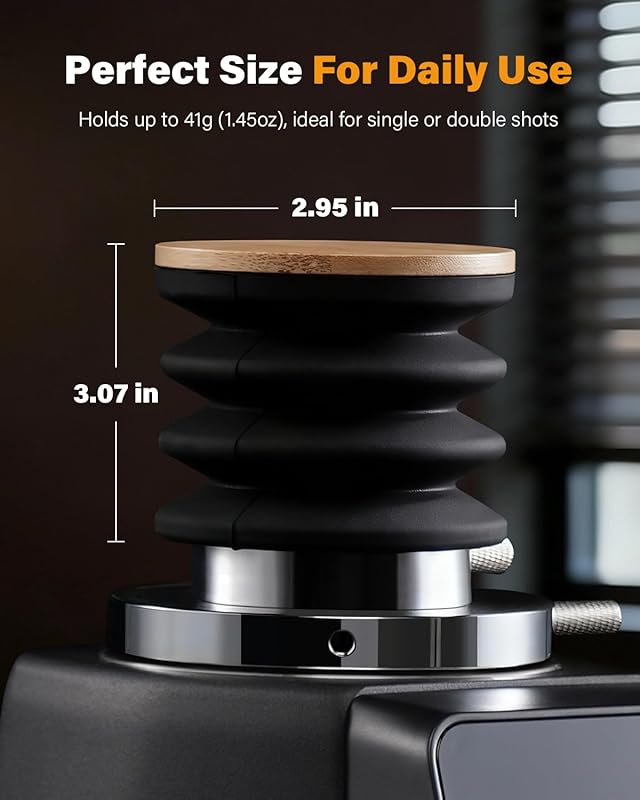
Retention sits below 0.1g when you use the included bellows, which is excellent for this price range. The magnetic dosing cup makes the workflow clean. Weigh your beans, drop them in, grind, and the grounds land right in the cup ready for dosing. The 96W DC motor keeps noise levels reasonable for early morning grinding sessions.
At $159.99, this competes with grinders costing twice as much from brands like Eureka and Niche. If you're looking at a single dose espresso grinder and don't want to spend $300+, this is where I'd start. The build quality is solid, though it does feel lighter than premium options.
Pros: - Ultra-low retention under 0.1g with bellows - 65 stepless settings with 0.01mm precision - Quiet 190 RPM motor for early mornings - Magnetic dosing cup included
Cons: - Only 1 review on Amazon, so long-term reliability is unproven - Lighter build than premium competitors - Stepless adjustment takes time to learn
KRUPS Electric Blade Coffee Grinder
A compact blade grinder that works well for drip and French press, though it falls short for espresso.
The KRUPS blade grinder handles the basics well. The 1.6 oz capacity is enough for a couple of cups, and the removable bowl is dishwasher safe, which saves cleanup time. You press and hold the lid to grind, then release when the consistency looks right. It's intuitive enough that anyone can figure it out in seconds.
Where this grinder struggles is consistency. Blade grinders chop beans rather than crushing them between burrs, so you get a mix of fine powder and larger chunks in every batch. For drip coffee or French press, that inconsistency is tolerable. For espresso, it's a dealbreaker. The grind will choke your machine one shot and gush through the next.
That said, the price is hard to argue with at $28.75. If you're grinding for a basic drip setup and want something small that cleans up easily, the KRUPS does the job. Just don't expect the precision of a burr grinder.
Pros: - Dishwasher-safe removable bowl - Compact footprint on the counter - Simple press-and-hold operation
Cons: - Inconsistent grind size (blade grinder limitation) - Not suitable for espresso - No grind settings, just visual guessing
BLACK+DECKER One Touch Coffee Grinder
The best-selling budget blade grinder on Amazon with over 18,000 reviews and a 4.6 star rating.
This is the grinder you buy when you want freshly ground coffee without spending much. The one-touch push-button control is dead simple. Load beans, lock the lid, press the button, and hold until your grounds look right. The 2/3 cup capacity handles enough beans for a full pot of drip coffee.
The lid-locking safety feature is a nice touch. The blades won't spin until the lid clicks into place, which prevents the kind of mess that happens when you accidentally bump the button on cheaper grinders. Build quality is decent for the price, with stainless steel blades and a durable grinding bowl.
Like any blade grinder, consistency is the weak point. You'll get a range of particle sizes in every batch. Pulsing the button in short bursts helps, but it's never going to match what a burr grinder produces. For $25.99, though, this is a solid entry point for anyone who just wants to stop buying pre-ground coffee.
Pros: - Extremely affordable at $25.99 - Lid-locking safety mechanism - 18,000+ reviews confirm reliability - Large 2/3 cup capacity
Cons: - Uneven grind quality typical of blade grinders - No way to set specific grind sizes - Bowl is not removable for easier cleaning
Hamilton Beach Custom Grind (80406)
A step up from basic blade grinders with adjustable grind size and hands-free operation.
The Hamilton Beach 80406 sits in an interesting middle ground. It's still a blade grinder, but it adds an adjustable selection ring that lets you choose your grind size and the number of cups (4 to 14). Press the top once and it grinds automatically, then shuts off when done. That hands-free feature means you can walk away while it works.
The removable grinding bowl is stainless steel and dishwasher safe, which makes cleanup genuinely easy. Pour beans in, grind, then lift the bowl out and dump grounds directly into your coffee maker. No awkward tapping or scraping required. If you're looking for a single dose grinder on a tight budget, this is one of the more practical options available.
At $37.99, you're paying about $12 more than the BLACK+DECKER for the auto-shutoff and grind selection features. Whether that's worth it depends on how much you value convenience. I think it is, especially for daily use.
Pros: - Hands-free operation with auto shutoff - Adjustable grind size selection ring - Dishwasher-safe removable bowl - Grinds enough for 4-14 cups
Cons: - Still a blade grinder at heart - Grind consistency lags behind burr options - Selection ring is imprecise for espresso
Proctor Silex Sound Shield (80402)
The quietest blade grinder available, designed for early risers who don't want to wake the household.
If noise is your biggest complaint about grinding coffee at home, the Proctor Silex Sound Shield addresses that directly. It claims to be 50% quieter than standard grinders, thanks to its Sound Shield technology. In my experience, it's noticeably less jarring than competitors. You can grind a batch at 6 AM without the buzz traveling through the walls.
Capacity is generous at up to 12 cups worth of grounds. The grinding bowl removes easily for filling and pouring, and it's dishwasher safe. Stainless steel blades handle the actual grinding, and they've proven durable based on the 735 reviews and 4.6 star average.
The tradeoff is the same one every blade grinder makes. You're sacrificing grind consistency for convenience and price. At $24.95, this is one of the cheapest options in the roundup, and the noise reduction makes it worth considering if you share your home with light sleepers. For anyone exploring the Eureka Mignon Single Dose or similar premium grinders, this isn't in the same category. But it does what it does well.
Pros: - 50% quieter than standard blade grinders - Grinds enough for up to 12 cups - Dishwasher-safe removable bowl - Very affordable at $24.95
Cons: - Blade grinder means inconsistent results - No grind size adjustment dial - Sound Shield adds some bulk to the design
SHARDOR Electric Super Silent Blade Coffee Grinder
A quiet blade grinder with a timed grind control knob for more repeatable results.
The SHARDOR stands out from other blade grinders because of its rotary timing knob. Instead of holding a button and guessing, you turn the knob to set a grind time. There are second marks printed above the knob, so you can repeat the same grind duration each morning. Fine grinds get more time, coarse grinds get less. It's not as precise as a burr grinder's settings, but it's a meaningful upgrade over the press-and-pray approach.
Noise levels average 63 dB, which the brand claims is quieter than most competitors. In practice, it's comfortable enough for morning use without feeling like you're running a blender. The grinder comes with a 2-in-1 coffee spoon that has a built-in brush for cleaning, which is a thoughtful inclusion at this price.
At $25.99, the SHARDOR matches the BLACK+DECKER on price while adding the timing knob and lower noise. If you want a blade grinder with slightly more control, this is the better pick. If you're interested in stepping up to a proper Eureka Single Dose burr grinder later, the SHARDOR works fine as a placeholder while you save up.
Pros: - Timed grind control with rotary knob - Quieter than average at 63 dB - Includes cleaning brush/spoon combo - 2-year warranty included
Cons: - Still a blade grinder with inconsistent particle sizes - Small capacity limits batch size - Timer helps but can't fix blade grinder physics
Buying Guide: What to Look For in a Single Dose Grinder
Burr vs. Blade
This is the single biggest decision. Burr grinders crush beans between two surfaces for uniform particle size. Blade grinders chop beans randomly. For espresso and pour-over, burrs are essential. For basic drip coffee, blades work fine. The Wirsh GU38 is the only burr grinder in this roundup, and the difference in grind quality is massive.
Retention
Retention is how much ground coffee stays trapped inside the grinder after each use. For single dose grinding, you want as close to zero as possible. The Wirsh GU38 claims under 0.1g, which is excellent. Blade grinders generally have low retention because there's nowhere for grounds to hide, but they lose points on consistency instead.
Grind Adjustment Range
If you brew multiple methods (espresso, pour-over, French press), you need a grinder that covers all of them. Stepless grinders like the GU38 offer infinite adjustments. Blade grinders offer none. Everything in between uses stepped dials with fixed positions.
Noise Level
Grinding coffee is loud. If you live with other people or grind early in the morning, noise matters. The Proctor Silex Sound Shield and SHARDOR both prioritize quiet operation. Burr grinders at low RPM (like the GU38 at 190 RPM) tend to be quieter than high-speed blade grinders.
Build Quality and Ease of Cleaning
Look for removable parts that are dishwasher safe if convenience matters to you. Metal construction lasts longer than plastic. Blade grinders tend to be easier to clean because they're simpler machines, but burr grinders with removable burr assemblies aren't far behind.
Frequently Asked Questions
What is single dose grinding?
Single dose grinding means weighing out exactly the amount of beans you need for one brew session, grinding them, and using all the grounds immediately. There are no leftover beans sitting in a hopper going stale. It's the preferred method for specialty coffee enthusiasts who want maximum freshness.
Do I need a burr grinder for single dosing?
You don't need one, but you'll get much better results with a burr grinder. Blade grinders can technically grind single doses, but the inconsistent particle size means you lose much of the freshness benefit. The whole point of single dosing is precision, and burr grinders deliver that.
How much retention is acceptable?
For true single dose grinding, under 0.5g is good and under 0.2g is excellent. The Wirsh GU38 claims under 0.1g with bellows, which is among the best at its price point. Higher retention means you're losing some of your carefully weighed dose inside the grinder.
Can I use a blade grinder for espresso?
Technically yes, but I wouldn't recommend it. Espresso requires a very fine, very uniform grind. Blade grinders produce a wide range of particle sizes that lead to uneven extraction. Your shots will taste sour and bitter at the same time because some grounds over-extract while others under-extract.
How many grams should I grind for a single dose?
That depends on your brew method. For espresso, 14-20g is standard. For pour-over, 15-25g depending on your recipe. For French press, 25-35g for a single serving. Weigh your beans on a scale before grinding for repeatable results.
Are expensive single dose grinders worth it?
For espresso, absolutely. The difference between a $25 blade grinder and a $160 burr grinder is night and day in the cup. For drip coffee, the gap narrows. If you're just making basic morning coffee, a budget option works fine. If you're chasing specific flavors, invest in burrs.
Conclusion
The Wirsh Geimori GU38 is the clear winner here if you want a genuine single dose experience. Its combination of 65 stepless settings, sub-0.1g retention, and quiet operation at $159.99 makes it the best value for serious coffee drinkers. If you're on a tight budget and primarily brew drip coffee, the SHARDOR Super Silent offers the best blend of control and quiet operation among the blade grinders at $25.99. For hands-free convenience, grab the Hamilton Beach 80406. And if noise is your top priority, the Proctor Silex Sound Shield earns its name.