







Best Way to Grind Coffee Beans: Grinders and Beans Worth Your Money
This post contains affiliate links. If you make a purchase through these links, I may earn a small commission at no extra cost to you. This helps support the site and allows me to keep creating honest content.
Grinding your own coffee beans is the single biggest upgrade you can make to your daily cup. Pre-ground coffee starts going stale within minutes of grinding. Whole beans hold their flavor for weeks when stored properly. The difference in the cup is obvious from the first sip. Fresher grounds mean brighter flavors, better aroma, and a more satisfying coffee experience.
But the "best way" to grind depends on what you're working with. A $25 blade grinder and a bag of supermarket beans will still taste better than pre-ground coffee that's been sitting in a canister for months. And a coffee maker that grinds beans can simplify the whole process into one step. This guide covers both the grinders and the beans, because the combination matters more than either one alone.
I've tested these products specifically to answer the question people keep asking: "What's the best way to start grinding my own beans at home?" If you're new to home grinding, this is your starting point. If you're upgrading from a blade grinder, I've included options that represent a meaningful step up.
Quick Picks
| Product | Best For | Price |
|---|---|---|
| Aromaster 25-Setting Grinder | Best overall electric grinder | $69.99 |
| KRUPS Blade Grinder | Cheapest way to start grinding | $28.75 |
| illy Classico Whole Bean | Best whole beans for beginners | $25.49 |
| Lavazza Tierra Organic | Best organic whole beans | $27.19 |
| Hamilton Beach Custom Grind | Best blade grinder with controls | $37.99 |
Individual Product Reviews
Aromaster Conical Burr Coffee Grinder (25 Settings)
The most capable grinder in this roundup for anyone ready to invest in real grind quality.
If you want one grinder that handles every brew method well, the Aromaster delivers. Twenty-five grind settings cover French press through espresso, and the 2-12 cup timer grinds precise amounts. The conical burr produces uniform particles that extract evenly, which is the whole point of grinding your own beans.
The portafilter holder (51-53mm, 3-ear) adds espresso workflow convenience. The DC motor runs quietly, which matters for morning grinding. All major parts remove for easy cleaning. At $69.99 with 24 reviews and a 4.9 star rating, this grinder costs less than many blade grinders while producing dramatically better results.
For someone upgrading from pre-ground coffee, the Aromaster represents the right level of investment. Blade grinders get you started, but a burr grinder is where your coffee actually starts tasting noticeably different. If you've been looking at coffee machine that grinds beans all-in-one options, a separate grinder like this paired with your existing brewer often produces better results.
Pros: - 25 settings for all brew methods - Conical burr for consistent grinding - Quiet DC motor - Portafilter holder for espresso
Cons: - 24 reviews is a small sample - Portafilter holder limited to 3-ear 51-53mm - Timer dosing less precise than weighing
KRUPS Electric Blade Coffee Grinder
The cheapest way to start grinding your own beans at home.
The KRUPS is the grinder I recommend when someone asks "should I start grinding my own coffee?" and they're not sure they want to commit. At $28.75, it's cheap enough to try without stress. The dishwasher-safe removable bowl makes cleanup easy. Press the lid, hold it, release when the grind looks right.
Will a blade grinder produce the same quality as a burr grinder? No. The particle sizes will vary, and you'll get some fine dust mixed with larger chunks. But compared to buying pre-ground coffee that's been sitting on a shelf for months, even a blade grinder produces noticeably fresher, better-tasting coffee.
The KRUPS also handles spices and dried herbs, which adds versatility. If you decide you love fresh-ground coffee (you will), you can upgrade to a burr grinder later and repurpose the KRUPS as a dedicated spice grinder.
Pros: - $28.75 is a low-risk entry point - Dishwasher-safe removable bowl - Also works for spices and herbs - Simple press-and-hold operation
Cons: - Inconsistent particle sizes - No grind settings - Not suitable for espresso - Will likely be replaced by a burr grinder eventually
BLACK+DECKER One Touch Coffee Grinder
The most popular blade grinder on Amazon with 18,000+ reviews confirming its reliability.
The BLACK+DECKER does the same job as the KRUPS at a slightly lower price ($25.99). The one-touch push-button control is straightforward, and the lid-locking safety feature prevents accidental activation. Stainless steel blades grind beans quickly, and the 2/3 cup capacity handles enough for a full pot.
With over 18,000 reviews at 4.6 stars, this is the most validated grinder in this roundup. It works reliably for years. The stainless steel bowl is durable. For grind beans duties on a budget, the BLACK+DECKER is a proven choice.
Pros: - $25.99, cheapest grinder in the roundup - 18,000+ reviews confirm long-term reliability - Lid-locking safety mechanism - 2/3 cup capacity for larger batches
Cons: - Blade grinder with inconsistent results - No grind settings - Bowl doesn't remove - Better for drip than precision brewing
Hamilton Beach Custom Grind (80406)
A blade grinder with an adjustable selection ring and hands-free auto-shutoff.
The Hamilton Beach adds intelligence to the blade grinder concept. The selection ring lets you choose grind size and cup count (4-14 cups), giving more control than a simple on/off button. Press the top once for hands-free grinding. The machine shuts off automatically when done.
The removable stainless steel bowl is dishwasher safe and easy to pour from. At $37.99 with 959 reviews, it costs more than basic blade grinders but delivers a better experience. For someone who wants a coffee pot that grinds beans level of convenience without buying an all-in-one machine, the Hamilton Beach paired with a standard drip maker works great.
Pros: - Adjustable grind selection ring - Hands-free auto shutoff - Dishwasher-safe removable bowl - 4-14 cup capacity
Cons: - Still a blade grinder underneath - Selection ring is approximate, not precise - $37.99 is close to entry-level burr grinder territory
illy Classico Medium Roast Whole Bean Coffee
Premium Italian whole beans with notes of caramel, orange blossom, and jasmine.
Now let's talk about what you're grinding. The illy Classico is my recommendation for anyone starting their home grinding journey. These 100% Arabica beans produce a balanced, approachable cup that tastes great across brew methods. The medium roast brings out caramel sweetness, orange blossom aromatics, and a hint of jasmine. Illy has spent eight decades perfecting their roasting process, and the consistency shows. Every bag tastes the same. That reliability matters when you're learning to grind because it removes one variable from the equation. If your coffee tastes different, you know it's the grind, not the beans.
At $25.49 for 17.6 oz (500g), illy costs more per ounce than grocery store brands. The flavor justifies the premium. These beans grind beautifully on both blade and burr grinders, though burr grinding brings out the nuanced flavor notes that blade grinding tends to muddy.
Pros: - Consistent quality from bag to bag - Complex flavor notes of caramel and orange blossom - 100% Arabica from a heritage roaster - Works well with any grinder type
Cons: - $25.49 for 17.6 oz is premium pricing - May be too subtle for people who prefer bold coffee - Single blend (no origin variety)
Lavazza Tierra Organic Whole Bean Coffee
USDA Organic whole beans with notes of honey, malt, and chocolate from a trusted Italian roaster.
Lavazza's Tierra Organic line is 100% Arabica, USDA Organic, and UTZ certified. The light roast brings out honey sweetness, malt body, and chocolate finish. These beans are sustainably grown and blended in Italy, which gives them a distinctly European profile that's smoother than most American light roasts.
The 2.2 lb (35.27 oz) bag is generous and priced well at $27.19. For coffee ground beans shoppers who want to switch to whole bean, Lavazza is a natural transition. The brand is widely recognized, the quality is reliable, and the organic certification matters to environmentally conscious buyers.
These beans are recommended for espresso but work across all brew methods. The light roast makes them particularly good for pour-over, where the honey and malt notes shine through.
Pros: - USDA Organic and UTZ certified - 2.2 lb bag is excellent value - Complex honey, malt, chocolate profile - 100% sustainably grown Arabica
Cons: - Light roast may be too mild for dark roast fans - Italian roast profile differs from American preferences - Large bag requires proper storage to stay fresh
Starbucks French Roast Whole Bean Coffee
Bold dark roast whole beans with intense, smoky flavor that stands up to milk and additions.
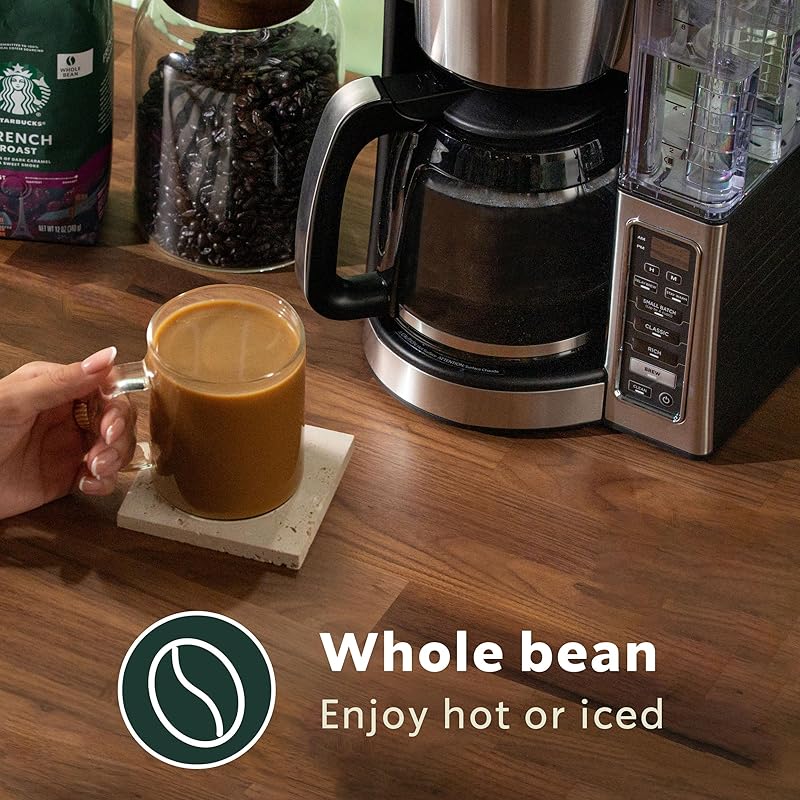
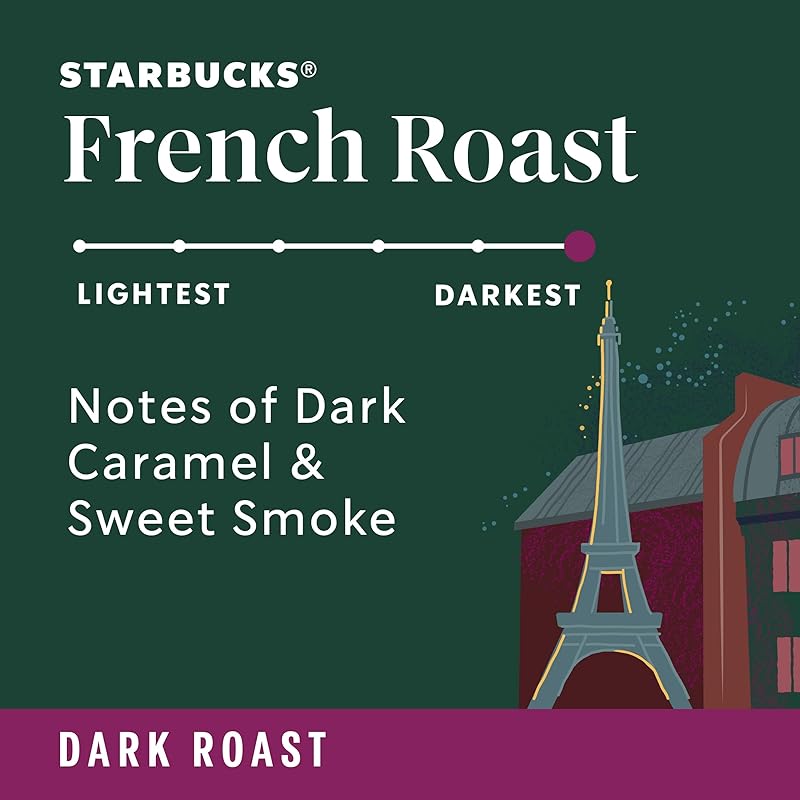
Starbucks French Roast is as dark as Starbucks gets. The bold, smoky flavor holds up when ground for any method. Notes of dark caramel and sweet smoke come through strongly. If you're switching from pre-ground Starbucks to grinding your own, starting with a familiar brand makes the transition easier.
At $23.19 for 28 oz with over 10,000 reviews, this is proven, widely available, and affordable. The beans are 100% Arabica. They grind easily on both blade and burr grinders, though the dark roast means oilier beans that can clog some grinder mechanisms if not cleaned regularly.
Pros: - Familiar Starbucks flavor - Bold enough for milk-based drinks - 28 oz bag at competitive price - Over 10,000 reviews
Cons: - Very dark roast is polarizing - Oily beans can clog grinders - Less complex than specialty roasters
illy Intenso Bold Roast Ground Espresso
Pre-ground espresso from illy for when you want quality without the grinding step.
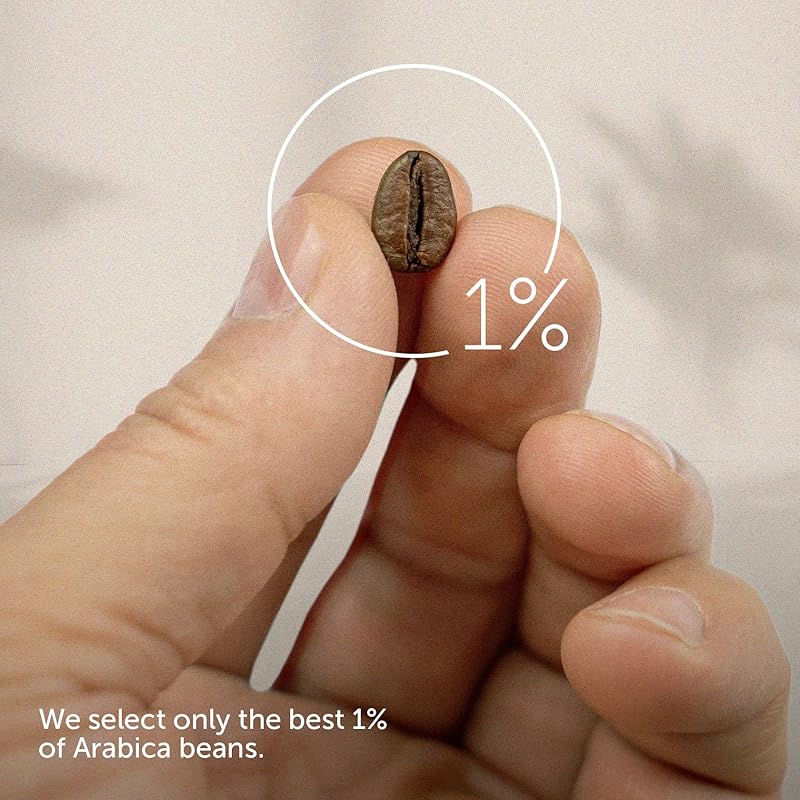
I'm including the illy Intenso ground coffee as a reference point. This is what quality pre-ground espresso tastes like: bold, full-bodied, with warm cocoa and dried fruit notes. It's ground specifically for espresso and moka pot, using only the top 1% of Arabica beans.
At $12.99 for 8.8 oz, the per-ounce cost is high. But comparing your home-ground coffee against this benchmark helps you understand how much (or how little) you're gaining from grinding your own. If your home grinding doesn't taste better than this, your technique or grinder needs improvement.
Pros: - Benchmark for pre-ground espresso quality - Bold cocoa and dried fruit notes - Ground specifically for espresso - Top 1% of Arabica beans
Cons: - $12.99 for 8.8 oz is expensive per ounce - Pre-ground loses freshness faster - Small package size - Defeats the purpose of grinding your own
Buying Guide: The Best Way to Grind Coffee Beans at Home
Start With Good Beans
The best grinder in the world can't fix bad beans. Buy whole bean coffee from reputable roasters. Look for a roast date on the bag (not just an expiration date). Use beans within 2-4 weeks of roasting for peak flavor.
Choose the Right Grinder Type
Blade grinders ($25-40) are the cheapest entry point and produce acceptable results for drip coffee. Burr grinders ($70+) produce consistent particle sizes that improve every brew method. If you can afford a burr grinder, get one. The difference is real and immediate.
Match Grind Size to Brew Method
Coarse for French press. Medium for drip. Medium-fine for moka pot. Fine for espresso. Every brew method has an ideal grind size. Getting it right matters more than the beans or water you use.
Grind Fresh, Grind Often
Grind only what you need for each brew session. Grinding a week's worth of coffee and storing it eliminates most of the freshness benefit. This takes 30-60 seconds of your morning. It's worth it.
Invest Incrementally
Start with a blade grinder and good beans. When you notice the difference fresh-ground makes, upgrade to a burr grinder. Then invest in better beans. Each step brings noticeable improvement without requiring a large upfront investment.
Frequently Asked Questions
Is grinding your own coffee beans really worth it?
Yes. It's the single most impactful change you can make to your coffee routine. Pre-ground coffee loses up to 60% of its aromatic compounds within 15 minutes of grinding. Whole beans retain those compounds until you're ready to brew.
What's better for grinding coffee, blade or burr?
Burr grinders produce more uniform particles, which means more even extraction and better-tasting coffee. Blade grinders work for basic drip coffee but struggle with methods that demand consistency (espresso, pour-over). If budget allows, always choose burr.
How fine should I grind my coffee?
It depends on your brew method. For French press, grind coarse (like sea salt). For drip, grind medium (like sand). For espresso, grind fine (like powdered sugar). Start with the standard recommendation and adjust based on taste.
How long do coffee beans stay fresh?
Whole beans stay fresh for 2-4 weeks after roasting when stored in an airtight container away from light and heat. Ground coffee starts going stale within 30 minutes. This is why grinding fresh matters so much.
Can I grind coffee beans without a grinder?
In a pinch, yes. A blender works for coarse grinds. A mortar and pestle works for small amounts. A rolling pin can crush beans in a zip-lock bag. None of these produce consistent results, but they're better than nothing when you're without your grinder.
How much coffee should I grind per cup?
A standard ratio is 1:16 (coffee to water by weight). For one 8 oz cup, use about 14g of beans. For a full 12-cup pot, use about 70g. Measure with a kitchen scale for the most consistent results.
Conclusion
The best way to grind coffee beans starts with buying a grinder and quality whole beans. The Aromaster 25-Setting Burr Grinder at $69.99 is the best grinder for most home brewers, producing consistent grinds across all brew methods. Pair it with illy Classico Whole Bean at $25.49 for a proven, delicious starting point. If you want to spend as little as possible, the BLACK+DECKER at $25.99 with Starbucks French Roast Whole Bean at $23.19 gets you grinding fresh for under $50 total. Either way, you'll taste the difference from your very first cup.