








Niche Zero: Where to Buy and Best Alternatives for 2026
This post contains affiliate links. If you buy through these links, I may earn a small commission at no extra cost to you. This helps support the site.
The Niche Zero is one of the most talked-about home coffee grinders of the past decade. Designed in the UK, it became famous for its single-dose workflow, near-zero retention, and 63mm Mazzer-licensed conical burrs. Coffee enthusiasts on Reddit, YouTube, and forums have praised it for years. Finding one to buy, though, has been a different story. Supply has been inconsistent, and the direct-from-Niche ordering process comes with wait times.
If you're searching for where to buy a Niche Zero or looking at comparable alternatives, you've come to the right place. The Niche Zero typically costs around $700-800 depending on the model and colorway. That puts it in the prosumer category, competing against grinders from Baratza, Eureka, and DF64. For buyers who want the single-dose, low-retention experience at a lower price point, there are now viable options that didn't exist when the Niche first launched.
This guide covers the best alternatives available on Amazon right now, from budget-friendly burr grinders to premium options that compete with the Niche's performance. Whether you're waiting for a Niche Zero to come back in stock or looking for something in a different budget range, you'll find a solid option here. For more general recommendations, check our coffee grinder guide.
Quick Picks
| Grinder | Best For | Price |
|---|---|---|
| Ollygrin BG702S-PG | Best Niche Zero alternative | $79.99 |
| Gaggia E24 (RI9380/46) | Best espresso machine pairing | $457.07 |
Understanding the Niche Zero Appeal
Before looking at alternatives, it helps to understand what makes the Niche Zero special and what features to prioritize when shopping for something comparable.
Single-dose workflow. The Niche is designed to grind one dose at a time. You weigh beans, pour them in, and grind. Almost nothing stays behind in the machine. This is different from hopper-based grinders where you fill the hopper with beans and rely on timed dosing. Single-dose grinding gives you more control and freshness.
Low retention. The Niche retains roughly 0.2g of coffee between doses. Many other grinders retain 2-5g, which means stale grounds mixing into your fresh dose. Low retention is especially important if you switch between different beans frequently.
63mm conical burrs. Large conical burrs grind quickly and produce a distinctive flavor profile with more body and sweetness compared to flat burrs, which tend toward clarity and brightness.
Stepless adjustment. Instead of clicking between preset positions, the Niche lets you turn the adjustment ring continuously, stopping at any point. This gives you infinite grind positions, which helps when fine-tuning espresso.
When evaluating alternatives, look for these features: low retention, large burrs, precise adjustment, and single-dose friendly design.
Available Products
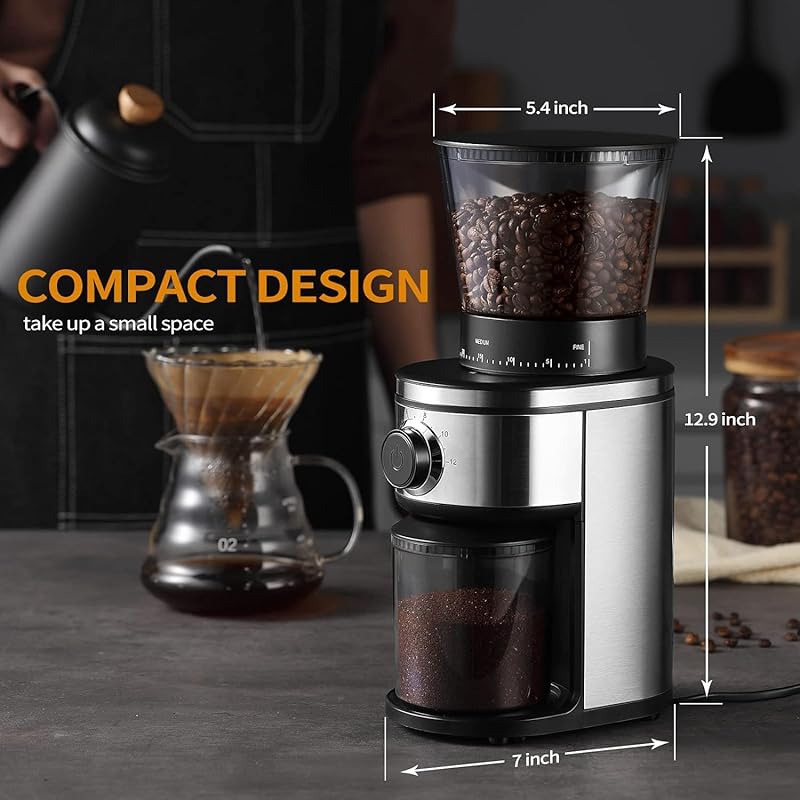
Ollygrin Burr Coffee Grinder BG702S-PG
The Ollygrin is the most direct alternative to the Niche Zero at a fraction of the price, and it gets the fundamentals right.
The 40mm stainless steel conical burrs are smaller than the Niche's 63mm, but they deliver uniform grinding that produces good extraction. The gear reduction motor runs slowly, which generates less heat and preserves the flavor and aroma of your beans. This is the same design philosophy the Niche uses. Heat from friction is the enemy of fresh coffee flavor, and slow grinding minimizes it.
With 30 grind settings, the Ollygrin covers everything from espresso to French press. The large 10-ounce bean hopper is actually a departure from the Niche's single-dose approach. If you prefer a hopper workflow where you fill once and grind multiple times, the Ollygrin accommodates that. The auto-locking system prevents beans from spilling when you remove the hopper.
At $79.99 with 1,663 reviews at 4.5 stars, the Ollygrin has one of the strongest review bases of any burr grinder in this price range. The 4.5-star rating across that many reviews suggests consistent quality. It won't match the Niche Zero's grind uniformity or retention numbers. The 40mm burrs simply can't compete with 63mm burrs on speed or consistency. But at roughly one-tenth the price, the Ollygrin provides 80% of the experience for 10% of the cost.
For someone who's curious about the single-dose, freshly-ground approach but isn't ready to invest $700+, the Ollygrin is the logical starting point. If you outgrow it, you'll know exactly what you want in a premium upgrade.
Pros: - 40mm stainless steel conical burrs - Gear reduction motor reduces heat - 30 grind settings covers all brew methods - 1,663 reviews provide excellent reliability data - $79.99 is a fraction of the Niche Zero's price
Cons: - 40mm burrs are significantly smaller than the Niche's 63mm - Hopper-based, not single-dose optimized - 30 stepped settings vs. Niche's stepless adjustment - Retention will be higher than the Niche Zero - Grind consistency won't match $700+ grinders
Gaggia E24 Espresso Machine (RI9380/46)
If you're shopping for a Niche Zero, you're likely building a serious espresso setup. The Gaggia E24 is worth mentioning as a machine that pairs exceptionally well with a premium grinder.
Made in Italy with a solid steel housing, the E24 delivers 9-bar espresso extraction through a commercial 58mm stainless steel portafilter. The three-way solenoid valve vents pressure after each shot, keeping the puck dry and making cleanup easier. These are features borrowed directly from commercial machines. You won't find solenoid valves on budget espresso makers.
The 58mm portafilter is the same size used in most coffee shops, which means you have access to a huge ecosystem of aftermarket baskets, tampers, and accessories. Upgrading your basket to a precision IMS or VST screen can noticeably improve shot quality.
At $457.07 with 3,068 reviews at 4.3 stars, the Gaggia E24 is a well-established machine. The 4.3-star rating is typical for prosumer espresso machines, where the learning curve and maintenance requirements generate some lower reviews from users who expected pod-machine simplicity. Among experienced users, the Gaggia Classic line is revered for its reliability, repairability, and extraction quality.
For a Niche Zero buyer, the Gaggia represents the ideal pairing philosophy: a capable, reliable machine that lets the grinder do its work. The Gaggia doesn't try to compensate for bad grind quality. It rewards good grinding with excellent espresso. Pair it with any coffee with grinder setup at the $200+ level and you'll be pulling shots that compete with specialty cafes.
Pros: - Italian-made with solid steel housing - 58mm commercial portafilter - Three-way solenoid valve for clean pucks - 3,068 reviews prove long-term reliability - Huge aftermarket accessory ecosystem
Cons: - $457 is a significant investment - No built-in grinder (designed for external grinder pairing) - Learning curve for new espresso users - Single boiler means no simultaneous steaming - 4.3-star rating reflects high user expectations
Niche Zero Alternatives: What to Look For
If you're specifically hunting for a Niche Zero replacement rather than a budget alternative, here are the features that matter most:
Burr Size
The Niche uses 63mm conical burrs. Larger burrs grind faster and produce more uniform particles. In the $200-500 range, look for grinders with 48mm+ burrs. Below $200, 38-40mm is standard.
Retention
The Niche retains approximately 0.2g. Most home grinders retain 1-5g. Grinders marketed as "single dose" typically have lower retention. Look for bellows or blower accessories that help purge retained grounds.
Adjustment Type
The Niche uses stepless (infinite position) adjustment. Most affordable grinders use stepped adjustment with a fixed number of positions. For espresso, more steps means finer control. At minimum, look for 30+ steps. Premium alternatives like the DF64 and Eureka Mignon series offer stepless adjustment.
Motor Speed
The Niche uses a slow motor (330 RPM) to reduce heat and noise. Budget grinders often use faster motors (500-1000+ RPM) that generate more heat. Gear reduction motors, like the Ollygrin uses, are a budget-friendly way to achieve slower grinding.
Build Quality
The Niche is known for its solid, quiet, premium feel. Plastic hoppers, flimsy adjustment rings, and excessive vibration are red flags in alternatives. Look for aluminum or steel bodies, metal adjustment mechanisms, and minimal play in the moving parts.
Where to Buy the Actual Niche Zero
The Niche Zero is primarily available through:
- Niche's official website (nichecoffee.co.uk): Direct ordering with periodic availability. Sign up for stock notifications.
- Specialty coffee retailers: Some authorized dealers stock the Niche, but markup varies.
- Used market: The Niche holds its resale value well. Check r/coffeeswap, Facebook coffee groups, and local classifieds.
Expect to pay $700-800 for a new unit. Used units in good condition typically sell for $500-650. Be wary of counterfeits or damaged units when buying secondhand.
Buying Guide: Key Considerations
Budget Reality Check
The Niche Zero at $700-800 is a serious investment. If that's your budget, buy the Niche. Nothing at that price matches its combination of features. If your budget is $80-200, the alternatives in this guide deliver good performance at a much lower cost, with the understanding that you're giving up grind uniformity, retention, and build quality.
Espresso vs. Filter
The Niche excels at espresso due to its stepless adjustment and low retention. If you primarily brew filter coffee (pour over, French press, drip), the difference between the Niche and a $100 grinder is less pronounced. Espresso is where premium grinders earn their price.
Single-Dose vs. Hopper
If you switch beans frequently, single-dose grinding prevents waste. If you drink the same beans all week, a hopper-based grinder is more convenient. The Niche is designed for single-dose. Most budget alternatives are hopper-based but can be used in a single-dose workflow by simply putting one dose of beans in the hopper at a time.
Long-Term Value
The Niche Zero typically lasts 10+ years with minimal maintenance. Budget grinders may need replacement every 2-4 years. Over a 10-year period, one $700 Niche may cost less than three $80 budget grinders. Consider the total cost of ownership, not just the purchase price.
Frequently Asked Questions
Is the Niche Zero worth $700?
For daily espresso drinkers, yes. The combination of low retention, 63mm burrs, stepless adjustment, and build quality is unmatched at the price. For occasional filter coffee drinkers, the premium is harder to justify. A $100-200 burr grinder handles filter methods well.
What's the closest alternative to the Niche Zero?
for single-dose workflow and low retention, the DF64 (not available in this product set) is the most commonly cited alternative. On Amazon, the Ollygrin at $79.99 is the best budget option, though it's a significant step down in performance.
Can I use the Niche Zero for pour over and espresso?
Yes. The stepless adjustment covers the full range from Turkish to French press. Many owners switch between espresso and filter daily. The low retention means you don't waste beans when switching between grind sizes.
How long is the wait for a Niche Zero?
Wait times vary from immediate availability to 2-3 months depending on stock. Sign up for email notifications on nichecoffee.co.uk for the fastest access to new batches.
Does the Niche Zero need any modifications?
Out of the box, the Niche works well. Popular modifications include aftermarket dosing cups, WDT tools for distribution, and silicone gaskets to further reduce retention. None of these are necessary, but they can improve the workflow.
What machine pairs best with the Niche Zero?
The Gaggia Classic Pro ($350-500), Breville Bambino Plus ($400-500), and Lelit Anna ($400-500) are popular pairings in the budget-to-mid range. For higher budgets, the Breville Dual Boiler, Lelit Bianca, and Profitec Pro 300 are common choices.
Conclusion
The Niche Zero remains one of the best single-dose grinders available for home espresso. If you can find one in stock at $700-800, it's a strong buy for daily espresso drinkers. If you need something now at a lower price, the Ollygrin BG702S-PG at $79.99 delivers solid burr grinding with 1,663 reviews backing its reliability. And if you're building a complete espresso setup, the Gaggia E24 at $457.07 is a proven Italian machine that rewards quality grinding with excellent extraction. Start with what your budget allows, and upgrade when the Niche comes back in stock if that's your goal.